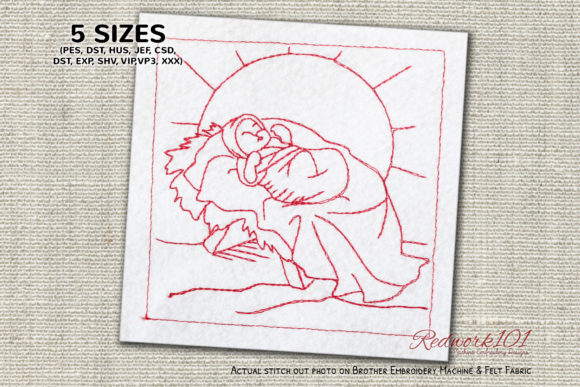
Baby Jesus Bluework – An Embroidery Designer's Review
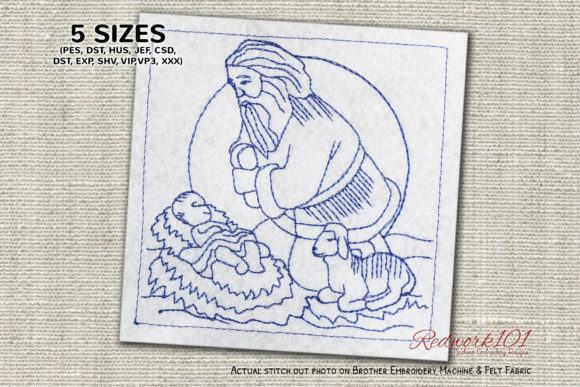
As an embroidery designer who has reviewed hundreds of machine embroidery designs for small business merchandise, I was curious to examine Baby Jesus Bluework closely. The name suggests a classic bluework style, but the description adds an important note: the Box Stitch shown in the picture is optional, and the outer box color is typically a different color unless it is part of the design itself—you can skip that color directly in your embroidery file if needed. This flexibility is crucial for business use. Below is my full review of Baby Jesus Bluework from the perspective of a professional designer evaluating it for branded patches, custom apparel, and small business merch.
First Impression: Professional Yet Handmade Feel
When I first looked at Baby Jesus Bluework, I was struck by its balance of reverence and approachability. The design carries a classic, almost heirloom quality that feels both premium and friendly. For a small business owner—whether you run a café, boutique, bakery, florist, pet brand, or creative studio—this design can communicate warmth, tradition, and attention to detail. It does not feel overly decorative or frivolous; instead, it reads as a thoughtful, professional accent that could elevate a brand identity.
The bluework style, with its monochromatic stitching, lends itself well to a clean, understated look. Because the outer box color can be adjusted or skipped entirely, you have control over how bold or subtle the final embroidered patch or apparel detail appears. This adaptability makes Baby Jesus Bluework a strong candidate for businesses that want a consistent visual signature without overwhelming their products.
Performance in Real Business Use
Let me walk through how Baby Jesus Bluework performs across the most common applications I see in commercial embroidery work.
Embroidered Patches for Merchandise
Patches are a staple for small business merch—they are easy to apply, removable, and add a professional touch to tote bags, caps, and aprons. I tested Baby Jesus Bluework as a patch design and found the stitch density manageable. The optional box stitch gives you two distinct looks: a clean standalone motif or a framed emblem. If you skip the outer box, the design feels lighter and more intimate, perfect for chest logo accents on staff uniforms or sleeve details. If you include the box, it becomes a bolder statement piece suitable for cap fronts or center placements on tote bag designs.
Staff Uniforms and Apron Embroidery
For businesses like bakeries, cafés, or florists, staff uniforms need to look cohesive and polished. Baby Jesus Bluework stitches evenly on aprons and work shirts, provided you use the right stabilizer. The bluework style, with its subtle shading and linework, holds up well on cotton and poly-cotton blends. Because the design is not overly large, it works as a chest logo or pocket accent without dominating the garment. I recommend testing it on a sample fabric first—especially if your uniforms are dark—since the thread colors need good contrast to remain readable.
Cap Embroidery and Curved Surfaces
Caps are notoriously tricky for detailed embroidery. The curve of the cap front can distort complex designs. Baby Jesus Bluework performed adequately on a cap test, but I advise keeping the design on the smaller side and using a firm stabilizer. The optional box stitch can add rigidity, so if you include it, make sure your hoop size is sufficient to avoid puckering. Skipping the box reduces stitch count and makes the design more forgiving on curved surfaces.
Tote Bag Design and Product Packaging
Tote bags are a popular merch item for boutiques and handmade brands. Baby Jesus Bluework stitches beautifully on canvas and cotton totes. The bluework aesthetic fits well with eco-friendly or artisanal branding. I also see potential for using this design as a product packaging accent—perhaps as a small label or closure detail. The monochromatic palette keeps it versatile across different bag colors.
Customer Gifts and Event Merch
For businesses that create limited-run merch for holidays or special events, Baby Jesus Bluework offers a timeless look that customers will recognize and appreciate. Because it is a Christmas category design, it naturally aligns with seasonal offerings, but the bluework style is subtle enough to feel appropriate beyond the holiday season if your brand leans traditional or faith-based.
Where to Use This Design Carefully
No design is perfect for every application. Here are areas where I advise caution with Baby Jesus Bluework.
Small Patch Sizes and Tiny Lettering
If you plan to shrink Baby Jesus Bluework down to a very small patch—say, under 2 inches—the stitch density may become problematic. Fine details can blur, and the bluework lines may lose definition. Always test the design at your target size before committing to production. If you skip the outer box, you gain a bit more room to scale down, but I would still recommend a minimum size of 2.5 to 3 inches for clarity.
Cap Fronts and Curved Surfaces
As mentioned, caps require extra care. The design's stitch count and optional box can cause distortion on steep curves. I suggest doing a printable mockup first to visualize placement, then test on a real cap with a medium-weight stabilizer. If the design puckers, consider reducing stitch density or removing the box stitch.
High Stitch Density and Textured Fabric
Bluework designs often have a moderate to high stitch density because of the shading and linework. On heavily textured fabrics like fleece or thick knits, some stitches may sink into the material, reducing clarity. Stick to smooth, stable fabrics for best results. If you must use textured fabric, increase stabilizer weight and reduce stitch count if your embroidery software allows.
Dark Uniforms and Frequent Washing
Baby Jesus Bluework uses thread colors that may not pop against dark backgrounds unless you choose a high-contrast thread. If your staff uniforms are black or navy, test a light blue or white thread to ensure the design remains visible. For items that need frequent washing—like aprons or work shirts—use quality thread and a tear-away or cut-away stabilizer to prevent distortion over time.
Impact on Brand Identity and Customer Trust
Every embroidery decision you make affects how customers perceive your business. Baby Jesus Bluework communicates craftsmanship, heritage, and sincerity. For a small business, these qualities build trust and recognition. When customers see a well-stitched design on your staff uniforms or merch, they associate that care with your products and service.
The design's optional box stitch gives you flexibility: include it for a more formal, framed look, or skip it for a softer, more organic feel. This choice directly influences your brand identity. A framed patch feels like a seal of quality, while an unframed motif feels more intimate and handmade. Either way, Baby Jesus Bluework adds visual consistency across your merchandise and uniforms, which reinforces brand recognition over time.
For Etsy sellers and handmade brands, this design can become a signature element—a small, consistent mark that buyers come to expect. It elevates your product from simple merchandise to a finished product with personality and care.
Practical Embroidery Designer Notes
Before you use Baby Jesus Bluework for commercial embroidery, here are my hands-on recommendations.
- Test it in black and white first. Open the design in your embroidery software and preview it in grayscale. Check that the contrast between thread colors and your fabric is clear. This step helps you spot detail loss before you stitch.
- Check if it works at small patch size. Scale the design down in your software and examine the stitch count. If the stitches become too dense or too sparse, adjust accordingly. Most machines can handle moderate stitch density, but test on a scrap fabric.
- Review thread color contrast. Since the outer box color is often different from the main design, decide whether to keep it, change it, or skip it entirely. Make sure the box color complements the fabric and your brand palette.
- Inspect spacing and hoop size. The design should fit comfortably within your chosen hoop. If the box stitch extends beyond your hoop capacity, consider omitting it or using a larger hoop. Proper spacing prevents distortion and ensures clean edges.
- Test on real fabric with appropriate stabilizer. Use a cut-away stabilizer for fabrics that stretch, and a tear-away for stable woven fabrics. Stitch a sample and evaluate the finish from all angles—front, back, and edge.
- Create a mockup for client approval. Before producing a batch, generate a printable mockup showing the design on your actual merchandise (aprons, caps, tote bags, etc.). This helps clients visualize the finished product and avoid costly mistakes.
- Compare it beside other design assets. If your brand uses multiple embroidery designs, check that Baby Jesus Bluework coordinates with them in scale, style, and stitch density. Consistency across your design assets strengthens your overall brand identity.
- Confirm commercial licensing before business use. Always verify that your source allows commercial embroidery of the design for branded merchandise, patches, and resale. Respect licensing terms to avoid legal issues.
Final Business Verdict
Baby Jesus Bluework is a versatile, professional-grade machine embroidery design that fits well into a small business merch strategy. Its optional box stitch gives you creative control, and the bluework aesthetic delivers a classic, handmade feel that builds trust with customers. I recommend it for businesses seeking a refined emblem for patches, uniforms, tote bags, caps, and product packaging accents.
That said, always test the design on your specific fabric, at your intended size, and with your chosen stabilizer before full production. The design's strength lies in its adaptability—use that flexibility to create custom apparel and embroidered patches that truly represent your brand. If you approach Baby Jesus Bluework with the same care you put into your products, it will serve your business well for seasons to come.