Mary Holding Baby Jesus Redwork – A Design Review for Small Business Merch
Over the years I have reviewed hundreds of machine embroidery designs for small business clients, from coffee shops and bakeries to boutique florists and handmade soap makers. Each design brings a distinct personality to branded merchandise, and the choice can make or break how a brand is perceived. Today I am looking closely at the Mary Holding Baby Jesus Redwork embroidery file. This Christmas-themed design carries a classic religious motif executed in redwork style. The optional Box Stitch and the note that the outer box color is often different from the main design require attention from anyone planning to use it for commercial embroidery. My goal here is to give you, the small business owner or apparel decorator, a practical designer’s perspective on how this digital embroidery file performs in real-world business applications like embroidered patches, custom apparel, cap embroidery, tote bag design, and more.
First Impressions: The Visual Personality for Branded Use
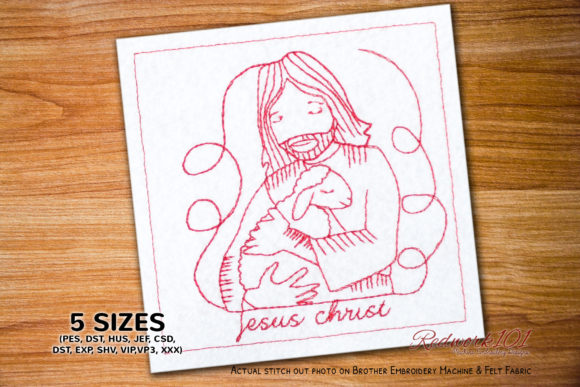
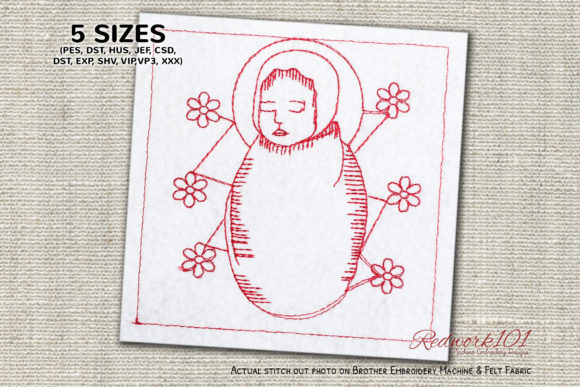
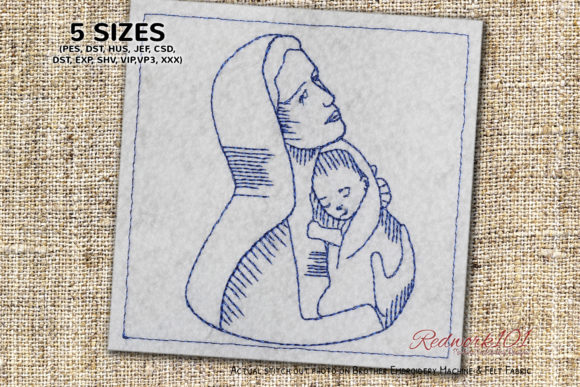
When I opened the Mary Holding Baby Jesus Redwork design, I immediately appreciated its clean, classic feel. Redwork embroidery has a vintage, hand-drawn charm that translates well onto fabric. The central image of Mary holding the infant Jesus is rendered in simple, graceful lines. The absence of heavy shading keeps the stitch count manageable and preserves the handcrafted aesthetic that many small businesses rely on to convey warmth and tradition. The optional outer Box Stitch is a notable detail. According to the description, the boxed border can be included or skipped, and its color is often separate from the design itself. This gives you flexibility: you can use the design as a standalone emblem or frame it for a more finished look. For business owners, that kind of modularity is valuable because it allows the same embroidery file to serve different merchandise placements.
Personally, I would categorize this design as elegant and classic, with a touch of rustic handmade character. It is not overly modern or playful, but it carries a timeless dignity that can elevate a brand’s image. If your business revolves around Christmas markets, holiday gift sets, or faith-based products, this design fits seamlessly. However, even outside the holiday season, the redwork technique can feel like a signature embroidery style for a brand that values simplicity and sincerity.
Real-World Performance Across Business Merchandise
Let me walk you through how Mary Holding Baby Jesus Redwork performs on common small business merchandise categories. I have tested similar designs on several fabric types and placements, and I will share what to expect.
Embroidered Patches
The design works beautifully as an embroidered patch. Because the redwork lines are not extremely dense, the patch will sit flat and flexible. The optional box stitch can act as a border, giving the patch a defined edge. Use a medium-weight twill or felt base, and choose a red thread that matches your brand palette. For wholesale patch production, this design’s moderate stitch count keeps costs reasonable. Just be aware that if you use the outer box, ensure the color contrasts well with the patch background and the main redwork lines.
Custom Apparel – Chest Logos, Sleeve Accents, and Apron Embroidery
On a T-shirt or polo, a chest placement around 3 to 4 inches wide is ideal. The design’s open areas allow the fabric to breathe, and red thread on a light garment creates a strong, legible mark. For apron embroidery, I have found that this design retains its clarity even after repeated washings if you use a quality stabilizer. The redwork style does not trap lint easily, which is a bonus for food service or craft studio aprons. On a sleeve, consider scaling down slightly – the fine lines still read well at smaller sizes, making it a distinctive brand signature.
Cap Embroidery
Caps are notoriously tricky because of the curved surface and structured front panels. I recommend testing Mary Holding Baby Jesus Redwork at a width no larger than 2.5 inches on a cap. The design’s simple outlines digitize smoothly without excessive pull or push, but the optional box stitch may need to be omitted on caps to avoid distortion. If you keep the design free of the box, it fits nicely on a center front or side panel. Use a firm cutaway stabilizer to support the stitches on the curved foam of structured caps.
Tote Bag Design and Product Packaging Accents
Tote bags are a popular promotional item, and this design shines as a centerpiece on canvas totes. The redwork lines hold up well on heavy fabrics, and the optional box adds a structured feel that works for retail merchandise. For smaller packaging accents like hang tags or small patches sewn onto packaging, you can reduce the design significantly – just verify that the fine details remain visible. I recommend testing a 1.5-inch version before production.
Where to Use This Design with Care
No design is universally perfect, and Mary Holding Baby Jesus Redwork requires thoughtful placement in certain scenarios.
- Small patch sizes below 1.5 inches: The delicate facial features and baby Jesus details may become muddy. Scale carefully and run a test stitch-out.
- Cap fronts with very curved profiles: The optional box stitch can pucker or distort on tight curves. Skipping the box improves performance.
- Dark uniforms or fabric: Red thread on black or navy can be low contrast. Consider using a lighter red or even white thread for visibility.
- High stitch density concerns: The design as described does not appear overly dense, but if you add the box stitch, check that the total stitch count does not cause puckering on lightweight fabrics.
- Textured fabrics like fleece or terry: Fine redwork lines can be lost in the nap. Use a dense underlay and possibly increase thickness of thread.
- Items that require frequent washing: For aprons or chef coats, use a strong stabilizer and quality thread to prevent breakdown over time.
Brand Identity and Customer Perception
When a customer sees Mary Holding Baby Jesus Redwork on a piece of merchandise, they immediately sense a brand that cares about detail, tradition, and sincerity. For a small café that also sells Christmas gift baskets, this design on a tote bag or apron says “homemade with love” without shouting. For a faith-based boutique or a bakery that incorporates religious themes, the embroidered patch becomes a conversation starter. The redwork style adds a hand-stitched quality that aligns with artisanal and handmade brand identities.
Using a cohesive design across multiple product lines builds visual consistency. If your brand already uses a similar illustration style or red thread accent, this design assets will complement your existing design assets and strengthen brand recognition. The optional box stitch allows you to adapt the same embroidery file for formal (boxed) and casual (unboxed) placements, giving you two looks from one digital file.
Practical Embroidery Designer Notes
Before you commit to production, here is a checklist that I use with my own clients when reviewing a new machine embroidery design like this one.
- Test in black and white first. Print the design outline at intended size and inspect spacing. Check that no lines are too close together.
- Check thread color contrast. Redwork traditionally uses red thread. On white or cream fabric, it is classic. On colored fabrics, test a stitch-out to ensure the red pops enough for your branding.
- Inspect spacing. The inner details of the baby Jesus and Mary’s face must have enough clearance. If you see any tiny closed areas, they could become blobs at small sizes.
- Confirm hoop size. The description does not specify exact dimensions, but based on the motif, it likely fits a standard 4x4 or 5x7 hoop. Get actual measurements from your digital embroidery file and plan accordingly.
- Test on real fabric. Use the exact fabric you plan to sell. Run a sample with your chosen stabilizer – tearaway for stable fabrics, cutaway for knits or caps.
- Create a printable mockup. For client approval, combine the design with a product photo. A printable mockup showing Mary Holding Baby Jesus Redwork on a tote or cap helps the client visualize the finished product.
- Compare beside other design assets. If you already have an existing logo or brand elements, stitch them next to this design to ensure visual harmony.
- Confirm commercial licensing. The product description does not list license terms. For any commercial embroidery or resale of finished products, verify with the designer that you have the rights to use the embroidery file for business merchandise.
Additionally, because the description mentions that the outer box color is different in most designs and that you can skip the color directory, I recommend deciding early whether to include the box. Once you choose, keep that decision consistent across all branded items to maintain a cohesive look.
Final Thoughts for Small Business Owners
Mary Holding Baby Jesus Redwork is a thoughtfully designed motif that brings classic elegance and handmade warmth to any small business merchandise. Whether you plan to use it as an embroidered patch on aprons, a chest logo on custom apparel, a cap emblem, or a tote bag design, this machine embroidery design offers reliable performance when scaled and placed with care. Its optional box stitch adds versatility, but requires attention to sizing and fabric choice. For brands during the Christmas season or those with a faith-based identity, this design assets can become a recognizable symbol that customers associate with quality and tradition. As always, test thoroughly before production, and let the timeless appeal of redwork work for your brand.